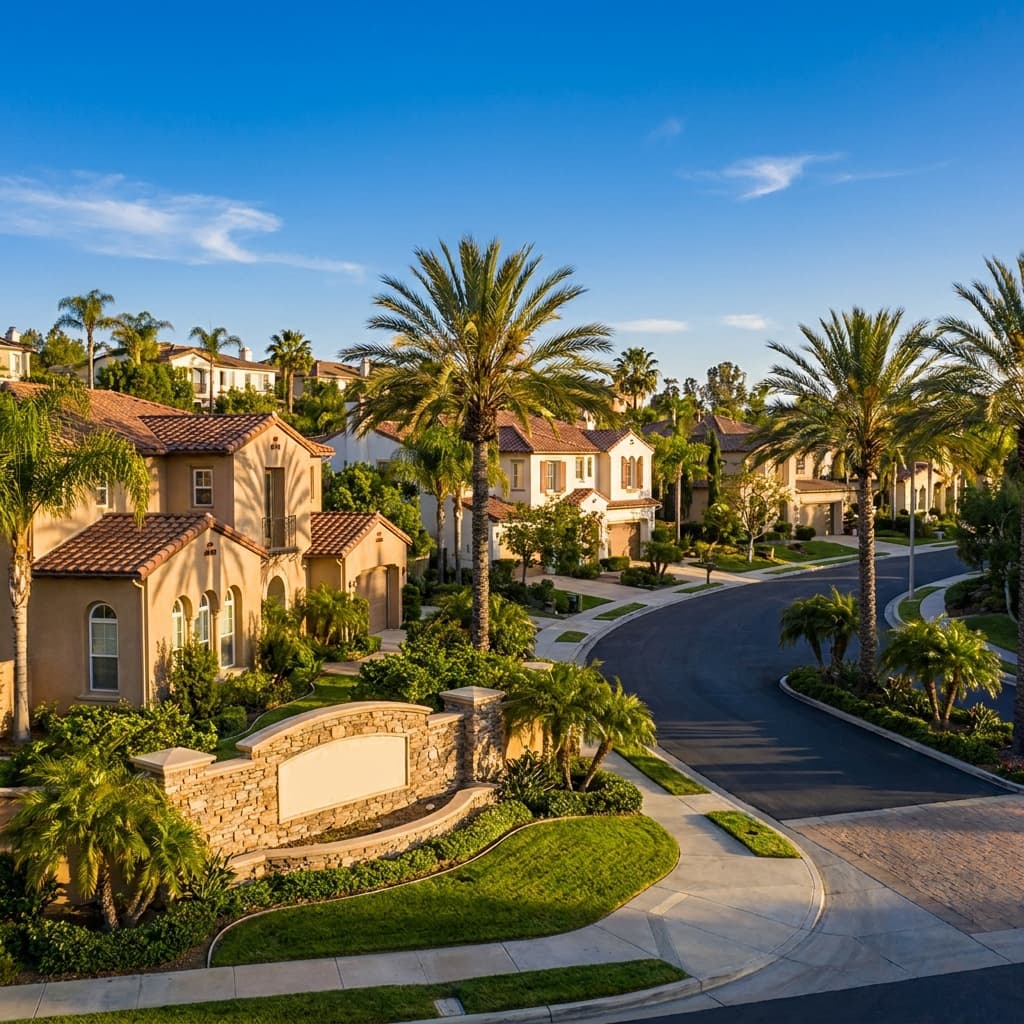
California is home to more than 50,000 common interest developments — homeowners associations, condominium associations, and planned communities — making it the state with the most HOAs in the nation. More than nine million Californians live in communities governed by an HOA. Given this scale, California has developed the most comprehensive body of HOA law in the United States: the Davis-Stirling Common Interest Development Act, codified in California Civil Code Sections 4000 through 6150.
The Davis-Stirling Act was originally enacted in 1985 and has been substantially revised multiple times, most notably with a comprehensive reorganization effective January 1, 2014, that renumbered the entire act for improved readability. The legislature continues to update the act annually, with new provisions taking effect each January. Understanding Davis-Stirling is essential for every California HOA board member, property manager, and homeowner.
This guide covers the major provisions of the act as they affect day-to-day HOA operations. While comprehensive, this is not a substitute for legal advice — consult a California community association attorney for guidance on specific situations.
Overview of the Davis-Stirling Act
The Davis-Stirling Act is organized into chapters covering the creation and governance of common interest developments. The major sections relevant to ongoing HOA operations include:
- General Provisions (Civil Code Sections 4000-4190): Definitions, applicability, and document delivery requirements.
- Governance (Sections 4700-4775): Board duties, meeting requirements, and decision-making procedures.
- Meetings (Sections 4900-4955): Member and board meeting requirements, including the Open Meeting Act.
- Elections (Sections 5100-5145): Detailed election procedures including secret ballots and inspector requirements.
- Financial Management (Sections 5200-5520): Budgets, assessments, reserves, and financial reporting.
- Assessment Collection (Sections 5650-5740): Delinquent assessment procedures, liens, and foreclosure.
- Records and Reporting (Sections 5200-5320): Record-keeping requirements and member access rights.
- Dispute Resolution (Sections 5900-5975): Internal dispute resolution (IDR) and alternative dispute resolution (ADR) requirements.
Board Governance Requirements
The Davis-Stirling Act imposes specific governance requirements on HOA boards that go beyond the general fiduciary duties applicable to all nonprofit directors.
Director Duties and Standards
Board members of California HOAs must act as fiduciaries for the association. Under Civil Code Section 4775 (incorporating Corporations Code Section 7231), directors must perform their duties in good faith, in a manner they believe to be in the best interests of the association, and with the care of an ordinarily prudent person in a similar position. Directors may rely on information and reports provided by legal counsel, accountants, or other qualified professionals.
Conflicts of Interest
California Corporations Code Section 7233 governs conflicts of interest for nonprofit directors, which applies to HOA boards. A transaction involving a potential conflict is not automatically void if the conflict was disclosed and the transaction was approved by the board in good faith, or if the transaction was fair and reasonable to the association at the time it was authorized.
Meeting Requirements
The Open Meeting Act
One of the most significant provisions of Davis-Stirling is the Open Meeting Act (Civil Code Sections 4900 through 4955). This act requires that board meetings be open to all members of the association, with limited exceptions for executive sessions.
Notice requirements: The board must provide notice to all members at least four days before a board meeting (Civil Code Section 4920). The notice must include the time and place of the meeting and an agenda describing each item of business to be discussed or acted upon. For emergency meetings, notice must be given as soon as possible and at least two days in advance.
Member participation: The board must allow members to speak at any board meeting, except executive sessions. The board may establish reasonable time limits on member participation (Civil Code Section 4925).
Executive sessions: The board may meet in executive session (closed to members) only for specific purposes outlined in Civil Code Section 4935: litigation, contracts with third parties, member discipline, personnel matters, meeting with a member regarding payment of assessments, and to discuss foreclosures. All decisions made in executive session must be reported at the next open meeting, except for privileged communications with legal counsel.
No secret meetings: A quorum of the board may not discuss, deliberate, or take action on any item of association business outside of a properly noticed meeting. Email discussions among a quorum of directors about association business violate the Open Meeting Act. Directors should be particularly careful about reply-all email chains that include a quorum of the board.
Annual Meetings
The association must hold an annual meeting of members. Notice must be provided 10 to 90 days in advance (Civil Code Section 4040). If a quorum is not present, the meeting may be adjourned to a future date with lower quorum requirements if the bylaws permit.
Financial Obligations
Annual Budget
The board must prepare and distribute an annual budget report to all members 30 to 90 days before the fiscal year begins (Civil Code Section 5300). The budget report must include the estimated revenue and expenses on an accrual basis, a summary of the association's reserves, a statement of anticipated special assessments, a statement regarding the current status of any litigation, and a summary of the association's property and liability insurance.
Reserve Study Requirements
California law requires associations to conduct a visual inspection of major components at least every three years to update the reserve study (Civil Code Section 5550). The reserve study must identify the major components with a remaining useful life of less than 30 years, estimate the remaining useful life of each component, estimate the cost of repair or replacement, and provide a reserve funding plan.
The board must distribute a reserve summary as part of the annual budget report (Civil Code Section 5300). This summary must disclose the current reserve balance, the reserve funding plan, the percentage of full funding, and whether the board has determined to defer or eliminate any reserve items. For the full statutory breakdown — inspection cycles, disclosure forms, and funding rules — see our California reserve study requirements page.
Financial Reviews and Audits
Civil Code Section 5305 establishes tiered financial review requirements based on the association's gross income. Associations with gross income of $75,000 or more must prepare a review of financial statements by a licensed CPA. Associations with gross income of $150,000 or more must obtain a CPA audit. The board may opt out of the review or audit requirement by a majority vote, but this opt-out must be approved each year.
Assessment Rules
Regular Assessments
The board may increase regular assessments without a member vote by up to 20 percent above the preceding fiscal year's assessment (Civil Code Section 5605). Any increase exceeding 20 percent requires approval by a majority of a quorum of members at a member meeting or by written ballot.
Special Assessments
Special assessments exceeding 5 percent of the association's budgeted gross expenses for the current fiscal year require approval by a majority of a quorum of members (Civil Code Section 5605). Emergency special assessments for immediate safety threats, court orders, or restoration of access to public utilities are exempt from this member approval requirement.
Assessment Collection
The Davis-Stirling Act provides detailed procedures for collecting delinquent assessments (Civil Code Sections 5650 through 5740). Before recording a lien, the association must send a pre-lien letter by certified mail at least 30 days before the lien is recorded. The pre-lien letter must include a description of the charges, a request for payment within 30 days, notification of the right to request a meeting with the board, and notification of the right to dispute the debt.
Lien recording requires a board vote (Civil Code Section 5673). The association may not record a lien unless the amount of delinquent assessments is $1,800 or more, or the assessments have been delinquent for 12 or more months. Foreclosure of an assessment lien is subject to additional restrictions, including a 90-day waiting period after the lien is recorded.
Homeowner Rights
Access to Records
Members have extensive rights to inspect and copy association records (Civil Code Sections 5200 through 5240). The association must make records available within 10 business days of a written request. Records include financial documents, meeting minutes, membership lists, contracts, insurance policies, and election materials. The association may charge a reasonable fee for copying but not for inspection.
Certain records are exempt from inspection, including personnel records, litigation strategy communications, and records that would invade an individual's privacy (such as individual member payment records).
Dispute Resolution
Davis-Stirling establishes a multi-step dispute resolution framework designed to resolve conflicts before they reach court.
Internal Dispute Resolution (IDR): Civil Code Section 5900 requires associations to offer an internal dispute resolution process. Either the member or the association may request IDR, and both parties must participate in good faith. The IDR process is informal — typically a meeting between the homeowner and one or more board members to discuss the dispute and attempt resolution.
Alternative Dispute Resolution (ADR): Before filing a lawsuit (with certain exceptions), the party must offer to submit the dispute to alternative dispute resolution — mediation or arbitration — as required by Civil Code Section 5930. If a party unreasonably refuses ADR, the court may not award attorney's fees to that party even if they prevail in the litigation.
Member Protections
California law provides several specific protections for homeowners:
- Solar energy systems: Civil Code Section 4746 significantly limits the association's ability to restrict the installation of solar panels and other solar energy systems.
- Electric vehicle charging: Civil Code Section 4745 requires associations to allow EV charging station installation in certain circumstances.
- Drought-tolerant landscaping: Associations cannot prohibit the use of drought-tolerant plants or artificial turf as a replacement for natural grass in individual lots (Government Code Section 65595).
- Political signs: The association cannot prohibit the display of political signs on a member's separate interest property (Civil Code Section 4710), though it may impose reasonable restrictions on size and placement.
- Flag display: Federal law (Freedom to Display the American Flag Act) and California law protect the right to display the U.S. flag, state flag, and military service flags.
- Rental restrictions: Civil Code Section 4741 limits an association's ability to impose rental restrictions on properties whose owners acquired title before the restriction was adopted. Keep in mind that HOA rules and city law are separate layers — many California cities also require short-term rental permits or registration (see California short-term rental rules by city), so an owner may need both HOA and city approval to rent.
Election Requirements
California has the most detailed HOA election requirements of any state, codified in Civil Code Sections 5100 through 5145.
Secret ballots: All votes for elections and assessments must be conducted by secret ballot (Civil Code Section 5100). This applies to director elections, assessment increases requiring member approval, amendments to governing documents, and grants of exclusive use of common area.
Election inspectors: The board must appoint one or three independent inspectors of election (Civil Code Section 5110). Inspectors cannot be board members, candidates, or related to any candidate. The inspectors are responsible for determining the authenticity of ballots, counting votes, and reporting results.
Ballot procedures: Ballots must be mailed to all members at least 30 days before the deadline for returning ballots (Civil Code Section 5115). The ballot return envelope must have a pre-printed return address, a space for the member's identification, and a unique tracking number. Ballots must be received by the inspector before the polls close at the meeting.
Candidate access: All candidates must have equal access to association media, mailing labels, and common area meeting space during the election campaign period (Civil Code Section 5105).
Insurance Requirements
While Davis-Stirling does not mandate specific insurance coverage amounts, it requires the board to disclose insurance information in the annual budget report (Civil Code Section 5300). The disclosure must include the name of the insurer, the type of coverage, the policy limits, and the amount of the deductible. Best practice for California HOAs includes general liability insurance, property insurance for common areas and structures, directors and officers (D&O) liability insurance, fidelity bond coverage, and workers' compensation if the association has employees.
Recent Legislative Changes
The California legislature amends Davis-Stirling regularly. Recent significant changes include:
- Accessory dwelling units (ADUs): Several recent laws have limited the ability of HOAs to restrict ADU construction, reflecting California's broader push to increase housing supply. Associations generally cannot prohibit ADUs on single-family lots where state and local law permits them.
- EV charging expansion: Updated provisions have expanded the circumstances under which associations must accommodate electric vehicle charging infrastructure, including in common area parking.
- Board meeting transparency: Recent amendments have strengthened the Open Meeting Act requirements, including clearer definitions of what constitutes a board meeting and expanded requirements for posting agendas.
- Assessment collection reform: Legislative changes have increased protections for homeowners facing assessment liens and foreclosure, including higher thresholds for lien recording and additional notice requirements.
- Remote meetings: Provisions allowing boards to conduct meetings by teleconference have been updated to reflect post-pandemic practices, with specific requirements for member access and participation.
How Technology Helps with Compliance
California's extensive HOA regulations create a significant compliance burden for boards. Modern HOA management software helps in several key areas.
Notice delivery: Platforms can automate the delivery of meeting notices, budget reports, and other required communications within the timeframes specified by law. Delivery tracking provides evidence that notices were sent.
Financial reporting: Automated financial reports simplify compliance with budget disclosure requirements and reserve study reporting. Software that tracks assessments, payments, and delinquencies provides the data needed for required financial summaries.
Record-keeping: Centralized document management ensures that association records are organized, accessible, and available to fulfill member inspection requests within the 10-business-day requirement.
Election management: While the actual ballot process has specific procedural requirements, management platforms can handle candidate nominations, meeting notices, and communication leading up to the election.
Assessment collection: Automated billing, payment tracking, and delinquency monitoring help boards follow the required collection procedures, including the pre-lien notice requirements and timeline restrictions.
Platforms like Effortless HOA provide these capabilities in a single system, reducing the risk of compliance gaps that arise when boards use disconnected tools for different functions.
The Bottom Line
California HOA law is extensive, detailed, and regularly updated. The Davis-Stirling Act touches every aspect of association governance, from how meetings are conducted to how assessments are collected to what homeowners can and cannot do with their property. Board members do not need to memorize every section, but they do need to understand the major provisions, know where to find answers, and work with qualified professionals when complex issues arise.
The best approach is to treat compliance as an ongoing process rather than a one-time effort. Review governing documents annually, stay informed about legislative changes, consult your HOA attorney proactively, and use technology to automate the mechanical aspects of compliance. California's detailed regulations can feel burdensome, but they exist to protect both the association and its members — and boards that follow them build the trust and transparency that make community governance work.