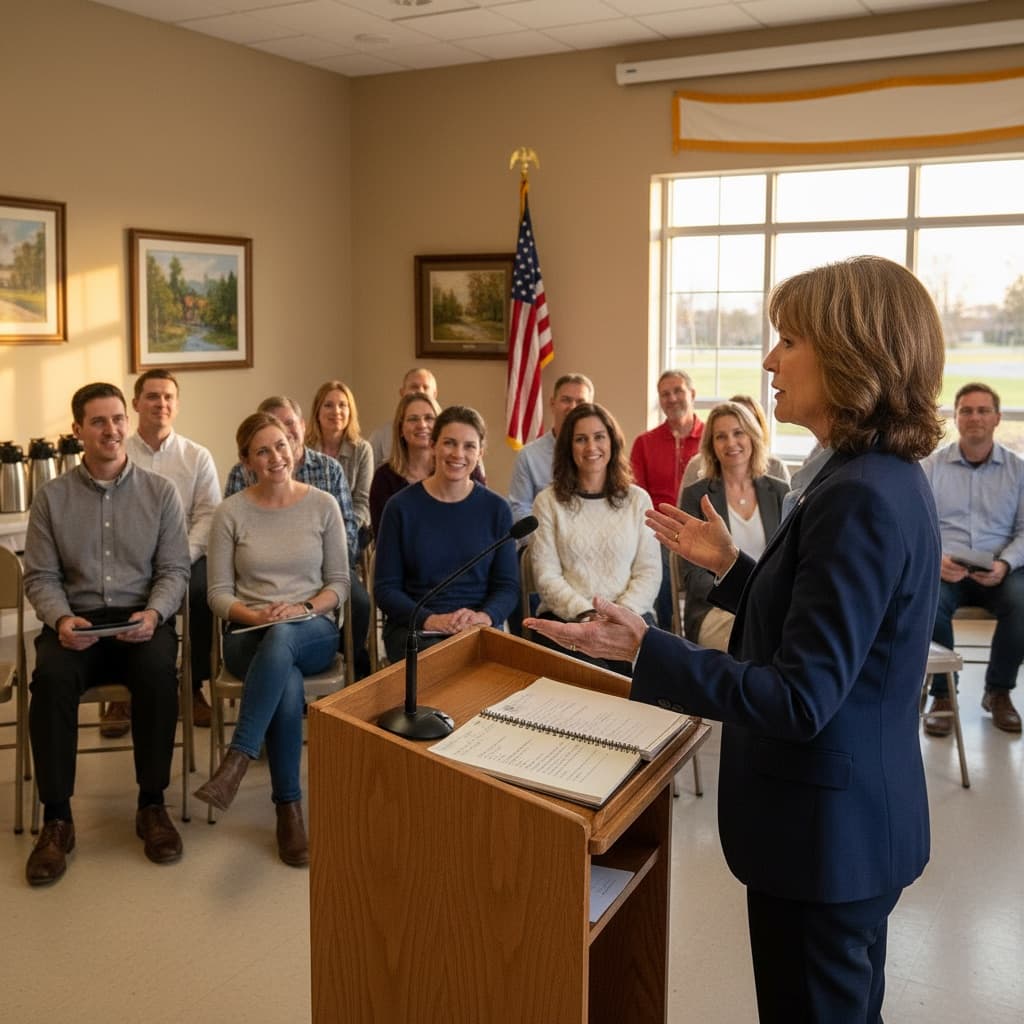
Serving on a homeowners association board is one of the most impactful things you can do for your community — and one of the most misunderstood. Many new board members step into the role expecting to attend a meeting once a month and vote on a few items. The reality is more demanding: HOA board members are fiduciaries with legal obligations to act in the best interest of the community. Understanding those obligations, along with the practical day-to-day responsibilities, is essential for effective governance and personal liability protection.
This guide covers the legal duties that apply to all board members, the specific responsibilities of each officer role, the key operational areas boards must manage, common mistakes to avoid, and how technology can help boards fulfill their responsibilities more effectively.
The Fiduciary Duty
Every HOA board member has a fiduciary duty to the association and its members. This is not just a best practice — it is a legal obligation that can result in personal liability if breached. The fiduciary duty breaks down into three components.
Duty of Care
Board members must exercise the same level of care that a reasonably prudent person would exercise in managing their own affairs. In practice, this means attending meetings, reading financial reports and documents before voting, asking questions when you do not understand something, and making informed decisions based on available information. You do not need to be an expert in every area, but you must make a genuine effort to understand the issues you are voting on.
The duty of care also means seeking professional advice when needed. If a legal question arises, consult an attorney. If a complex financial decision is on the table, consult a CPA or financial advisor. Board members who rely on qualified expert advice are generally protected from liability for decisions made based on that advice.
Duty of Loyalty
Board members must act in the best interest of the association, not in their own personal interest or the interest of any individual homeowner. This means avoiding conflicts of interest, disclosing any personal interest in a matter before the board, and recusing yourself from votes where you have a conflict. For example, if the board is considering hiring a landscaping company owned by a board member's spouse, that board member must disclose the relationship and recuse themselves from the discussion and vote.
The duty of loyalty also means maintaining the confidentiality of executive session discussions and sensitive association information. Board members who share confidential information — about delinquent homeowners, legal disputes, or personnel matters — breach this duty.
Duty of Good Faith
Board members must act honestly, in good faith, and with a genuine belief that their actions serve the community's interests. This duty prohibits using board authority for personal gain, retaliation against homeowners who disagree with the board, or making decisions based on personal grudges rather than community benefit. Good faith also means following the association's governing documents — the CC&Rs, bylaws, and rules — consistently and fairly.
Officer Roles and Responsibilities
Most HOA boards have four officer positions defined in the bylaws: president, vice president, treasurer, and secretary. Some boards also have one or more at-large members. Here is what each role typically entails.
President
The president is the chief executive officer of the association. Key responsibilities include:
- Presiding over all board meetings and the annual meeting
- Setting meeting agendas in coordination with other board members
- Serving as the primary spokesperson for the board
- Overseeing all committees and ensuring they fulfill their mandates
- Signing contracts, checks, and official documents on behalf of the association
- Managing relationships with vendors, attorneys, and other service providers
- Handling homeowner escalations that cannot be resolved by other board members
- Ensuring the board complies with governing documents and state law
The president does not have unilateral authority. All significant decisions must be made by the board through a proper vote. The president's role is to lead the process, not to dictate outcomes.
Vice President
The vice president serves as the president's backup and typically takes on a specific operational area. Responsibilities include:
- Presiding over meetings when the president is absent
- Assuming the president's duties if the president resigns or is unable to serve
- Chairing the architectural review committee (in many communities)
- Leading specific projects or initiatives assigned by the board
- Assisting the president with vendor management and homeowner relations
Effective vice presidents are proactive rather than passive. Rather than waiting for the president to be unavailable, they take ownership of a specific area — architectural reviews, grounds maintenance, community events — and manage it independently.
Treasurer
The treasurer is responsible for the association's financial health. This is arguably the most demanding officer role. Responsibilities include:
- Overseeing all financial accounts, including operating and reserve accounts
- Reviewing and approving disbursements and vendor payments
- Preparing monthly financial reports for the board (income/expense, balance sheet, aging report)
- Developing the annual budget with input from other board members
- Monitoring actual spending against the budget and flagging significant variances
- Ensuring dues are collected on time and managing delinquency follow-up
- Coordinating with the CPA for annual tax filings (typically Form 1120-H)
- Managing the reserve fund in accordance with the reserve study
- Presenting financial reports at board meetings and the annual meeting
The treasurer does not need to be a CPA, but they should be comfortable reading financial statements and working with numbers. HOA management software like Effortless HOA significantly reduces the manual workload by automating billing, payment tracking, and report generation — but the treasurer must still understand and review the numbers.
Secretary
The secretary is the association's record-keeper and communication hub. Responsibilities include:
- Taking minutes at all board meetings and the annual meeting
- Maintaining the official records of the association (minutes, resolutions, correspondence)
- Sending meeting notices and agendas to board members and homeowners
- Managing the association's document archive (CC&Rs, bylaws, policies, insurance certificates)
- Handling official correspondence on behalf of the board
- Maintaining the homeowner directory and ensuring records are current
- Certifying and recording amendments to governing documents
Accurate meeting minutes are legally important. They serve as the official record of board decisions and are the first documents requested in any dispute or legal proceeding. Minutes should record motions, votes, and key discussion points — not a word-for-word transcript, but enough detail to reconstruct the board's reasoning. See our meeting minutes template guide for templates and examples.
At-Large Members
At-large board members (sometimes called directors or members-at-large) participate fully in board discussions and votes but typically do not have a defined officer role. They may be assigned to specific areas based on their skills or interests:
- Community events and social activities
- Grounds and maintenance oversight
- Survey coordination and homeowner engagement
- Compliance monitoring and CC&R enforcement
- Technology and communications
At-large members bring diverse perspectives to board decisions and help distribute the workload beyond the four officers.
Key Responsibilities for All Board Members
Financial Oversight
Every board member — not just the treasurer — has a responsibility to understand the association's finances. This means reviewing financial reports before each board meeting, asking questions about items you do not understand, voting on the annual budget with a clear understanding of its implications, and monitoring reserve fund adequacy. Boards that leave financial matters entirely to the treasurer are setting themselves up for problems. Shared financial oversight is both a legal requirement and a practical safeguard.
CC&R Enforcement
Enforcing community standards is one of the board's most important and most difficult responsibilities. Consistent, fair enforcement protects property values and prevents selective enforcement claims. Our violation enforcement guide covers the full step-by-step process. Key principles include applying rules uniformly (the same violation should result in the same response regardless of who the homeowner is), providing written notice before taking enforcement action, following the hearing and due process requirements in your governing documents and state law, documenting all enforcement actions, and offering homeowners a reasonable opportunity to cure violations before imposing fines.
Meeting Management
Board meetings are where governance happens. Effective meeting management means distributing agendas in advance, starting and ending on time, keeping discussions focused on agenda items, following Robert's Rules of Order or your bylaws' prescribed meeting procedure, allowing homeowner input during designated open forum periods, and documenting all decisions in official minutes. Many states have open meeting requirements for HOA boards. In California, the Davis-Stirling Act requires board meetings to be open to members with limited exceptions for executive sessions. Check your state's requirements.
Vendor Management
Boards are responsible for hiring, overseeing, and paying vendors for community services — landscaping, maintenance, insurance, legal counsel, and accounting. Our vendor management guide covers the full vendor lifecycle. Best practices include obtaining competitive bids for significant contracts, requiring proof of insurance and appropriate licensing, documenting all agreements in written contracts, reviewing vendor performance periodically, and ensuring timely payment to maintain good relationships.
Communication
Transparent, regular communication with homeowners is both a legal requirement in many states and a practical necessity for community harmony. Boards should share financial summaries at least quarterly, provide meeting minutes within the timeframe required by governing documents, announce policy changes with adequate notice, and respond to homeowner inquiries within a reasonable time (48 to 72 hours for non-urgent matters). Management platforms with built-in communication features make this significantly easier by providing structured channels for announcements, discussions, and notifications.
Common Mistakes to Avoid
Even well-intentioned boards make preventable errors. Here are the most common.
- Acting without authority: Board members can only act within the authority granted by the governing documents. Unilateral decisions by individual board members, actions that require a homeowner vote but are decided by the board alone, or spending beyond authorized limits all create legal exposure.
- Selective enforcement: Enforcing rules against some homeowners but not others — whether due to personal relationships, laziness, or conflict avoidance — is one of the most common sources of HOA lawsuits. Enforce consistently or do not enforce at all.
- Ignoring reserve funding: Deferring reserve contributions to keep dues low feels good in the short term but creates long-term financial crises. When a major repair is needed and reserves are depleted, the community faces special assessments or deferred maintenance that reduces property values.
- Poor record-keeping: Failure to document decisions, financial transactions, and enforcement actions leaves the board vulnerable to disputes and legal claims. If it is not documented, it did not happen.
- Conducting business outside meetings: Decisions made informally — over email, at a board member's kitchen table, or in the parking lot after a meeting — violate open meeting requirements in many states and undermine governance transparency. All substantive decisions should be made at properly noticed meetings.
- Failing to get insurance: Directors and officers (D&O) insurance protects board members from personal liability for good-faith decisions. Every HOA board should carry D&O coverage. The cost is modest relative to the protection it provides. See our HOA insurance guide for coverage details and benchmarks.
Protecting Yourself as a Board Member
Board service involves legal risk, but you can manage that risk effectively.
- Carry D&O insurance: Directors and officers liability insurance is the single most important protection for board members. It covers legal defense costs and damages for claims arising from board decisions made in good faith.
- Follow governing documents: The CC&Rs, bylaws, and policies are your rulebook. Decisions that follow governing documents are much harder to challenge legally than decisions that deviate from them.
- Seek professional advice: Use attorneys, CPAs, and other professionals for decisions outside your expertise. The business judgment rule protects board members who rely on qualified professional advice.
- Document everything: Keep minutes, record votes, save correspondence, and maintain financial records. Good documentation is your best defense against claims of misconduct or negligence.
- Act collectively: Avoid making unilateral decisions. Actions taken by the board as a whole, after proper discussion and vote, are better protected than actions taken by individual board members.
How Technology Helps
Modern HOA management platforms address many of the challenges boards face in fulfilling their duties. Automated billing and payment processing reduce the treasurer's workload and improve collection rates. Audit trails document every action taken on the platform, providing a record that protects the board. Communication tools ensure homeowners receive timely information without requiring individual emails from board members. Document management keeps records organized, accessible, and preserved regardless of board member turnover. Financial dashboards give all board members real-time visibility into the community's financial position.
Platforms like Effortless HOA are specifically designed to support volunteer boards by automating repetitive tasks, maintaining records, and providing the tools boards need to govern effectively. The right technology does not replace good governance — but it makes good governance significantly easier to achieve and maintain.
The Bottom Line
HOA board service is a meaningful commitment with real legal responsibilities. Understanding your fiduciary duties, fulfilling your officer role, and following governance best practices protects your community and yourself. Invest time in learning your governing documents, use technology to automate what you can, seek professional advice when needed, and always act in good faith for the benefit of the community. The communities with the best governance are not the ones with the biggest budgets — they are the ones with board members who take their responsibilities seriously and use the right tools to fulfill them.