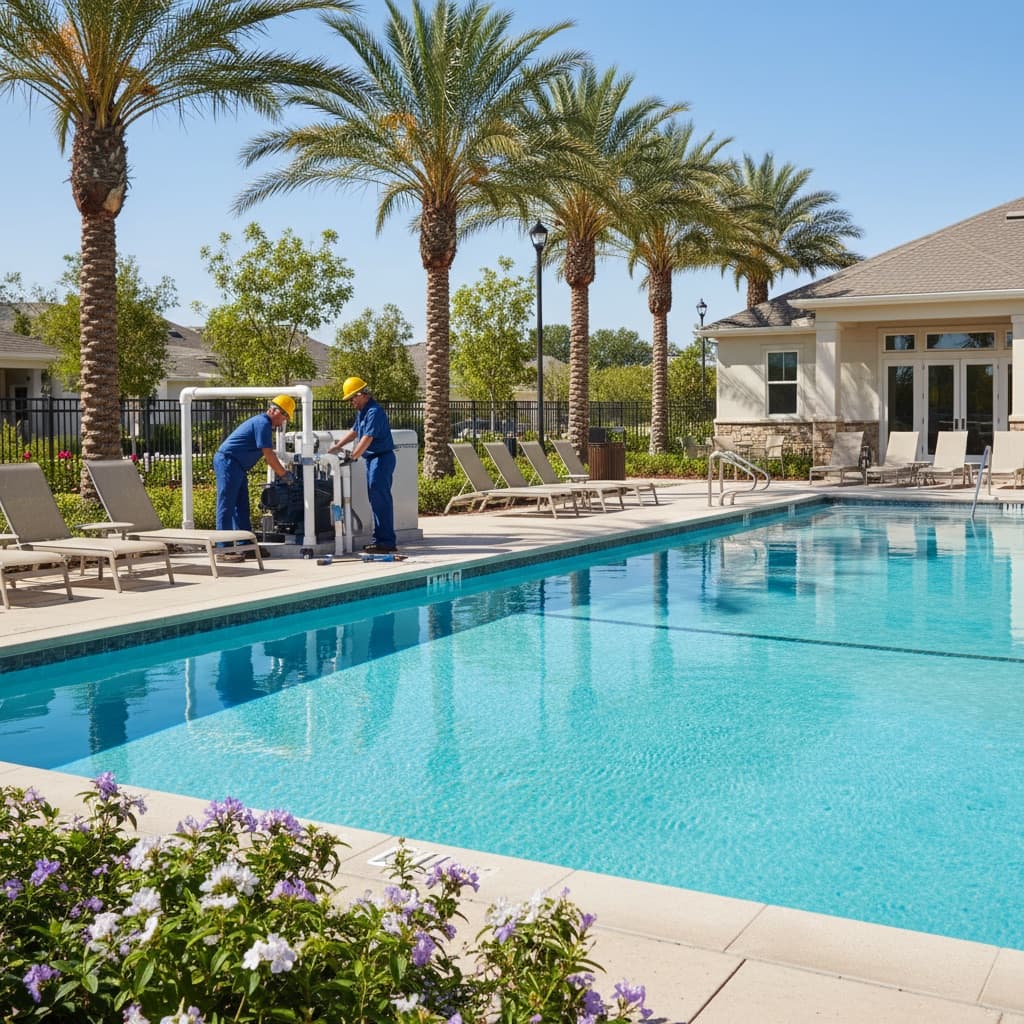
A board member in a 90-home community in Reno told me they spent $47,000 replacing a clubhouse HVAC system that failed in July. Their maintenance records showed the unit hadn't been serviced in four years. A $300 annual maintenance contract would have extended its life by 5-8 years. Instead, they got an emergency replacement at peak-season pricing, plus three weeks of angry homeowners complaining about a sweltering clubhouse.
That's the story of common area maintenance in most HOAs. Deferred maintenance creates emergencies. Emergencies cost 4-7 times what prevention would have. And the board that skipped the $300 service call ends up explaining a $47,000 expense at the annual meeting.
This guide covers how to build a maintenance program that prevents those conversations. It's not glamorous work. But it's the difference between a community that runs smoothly and one that lurches from crisis to crisis.
What Counts as Common Area Maintenance
Before you can plan maintenance, you need to know what you're maintaining. Common areas typically include:
- Grounds: Landscaping, irrigation systems, fencing, entry monuments, street trees, retention ponds, walking trails, parking lots, private roads.
- Buildings: Clubhouse, pool house, management office, storage facilities, mail kiosks, gazebos, restrooms.
- Amenities: Swimming pool, spa, playground, tennis/basketball courts, fitness center, dog park.
- Infrastructure: Storm drains, streetlights, signage, fire hydrants (if privately owned), gates and access control systems, security cameras.
- Building exteriors (condos/townhomes): Roofing, siding, paint, gutters, balconies, stairways, hallways, elevators.
Your CC&Rs define exactly what the association is responsible for maintaining. Read them. Some communities own their private roads. Others don't. Some are responsible for individual unit roofs. Others assign that to homeowners. If you're unsure about a specific asset, check the CC&Rs and your reserve study — the reserve study lists every common area component with its expected useful life and replacement cost.
Preventive vs. Reactive Maintenance
There are two ways to maintain things: fix them before they break, or fix them after. Every dollar spent on prevention saves $4-$7 in reactive repair costs. Here's why.
The Economics of Prevention
| Component | Preventive Cost (Annual) | Reactive Repair Cost | Savings Ratio |
|---|
| HVAC system (clubhouse) | $300-$500 service | $15,000-$47,000 replacement | 1:30 to 1:94 |
| Asphalt parking lot | $2,000-$4,000 sealcoat every 3 years | $40,000-$80,000 repaving | 1:10 to 1:20 |
| Pool pump and equipment | $500-$800 seasonal service | $3,000-$8,000 emergency repair | 1:4 to 1:10 |
| Flat roof (clubhouse) | $400-$800 annual inspection + repairs | $15,000-$35,000 early replacement | 1:19 to 1:44 |
| Irrigation system | $300-$600 spring startup + winterization | $5,000-$12,000 line replacement | 1:8 to 1:20 |
| Elevator (condo) | $3,000-$5,000 annual contract | $50,000-$150,000 modernization | 1:10 to 1:30 |
The math is overwhelming. Yet most HOA boards operate reactively because preventive maintenance is invisible. Nobody thanks the board for spending $500 on an HVAC service call. But everyone screams when the air conditioning dies in July.
The Deferred Maintenance Trap
Deferred maintenance is the quiet killer of HOA budgets. It works like this: the board decides to skip the $2,000 parking lot sealcoat this year to keep dues down. Next year, they skip it again. By year five, water has penetrated the asphalt through unsealed cracks, the subbase has deteriorated, and now you need a $60,000 repaving job instead of $10,000 in accumulated sealcoating. That $60,000 either comes from reserves (depleting funds meant for other projects) or from a special assessment.
The worst part: deferred maintenance compounds. A roof leak that goes unrepaired for six months doesn't just damage the roof. It damages the decking, the insulation, the drywall, the framing, and eventually the flooring below. A $500 roof patch becomes a $25,000 structural repair.
Building Your Maintenance Schedule
A maintenance schedule turns good intentions into actual work getting done. Here's a framework organized by frequency.
Monthly Tasks
- Property walk: One board member walks the entire community with a checklist and a phone camera. Document anything that needs attention: damaged fencing, dead plants, cracked pavement, graffiti, burned-out lights, clogged drains. This single habit catches 80% of issues before they escalate.
- Pool chemical testing and equipment check (seasonal): Verify chemical levels, inspect pumps and filters, check fencing and gates for compliance.
- Landscape inspection: Walk with your landscaping contractor. Point out areas that need attention. This keeps the contractor accountable and prevents the slow decline that happens when nobody's paying attention.
- Common building inspection: Check HVAC filters, test smoke detectors and exit lighting, inspect for water stains or moisture, verify fire extinguisher accessibility.
Quarterly Tasks
- Gutter and downspout cleaning (spring and fall at minimum, quarterly in forested areas).
- Storm drain clearing: Remove debris from catch basins and drain grates. Clogged drains cause flooding that damages roads, landscaping, and building foundations.
- Pest inspection: Common area buildings, especially in southern and coastal climates. Termite, rodent, and pest activity is cheaper to prevent than to remediate.
- Playground equipment inspection: Check for loose bolts, splintered wood, worn surfacing, and sharp edges. Document with photos. Playground injuries are a significant liability risk.
Semi-Annual Tasks
- Irrigation system startup (spring) and winterization (fall): Blow out lines, check heads and valves, adjust coverage for seasonal growth patterns.
- HVAC service: Spring cooling prep and fall heating prep for common area buildings.
- Fire system inspection: Sprinklers, alarms, extinguishers, and emergency lighting. Many jurisdictions require semi-annual or annual inspections by a licensed contractor.
- Elevator inspection (if applicable): Most states require semi-annual or annual inspections by a certified inspector.
Annual Tasks
- Roof inspection: Hire a licensed roofing contractor (not the person who installed it) to inspect all common area roofs. A $400-$800 inspection that catches a $500 repair before it becomes a $15,000 problem is the best money you'll spend all year.
- Asphalt assessment: Have a paving contractor evaluate roads and parking lots. Note cracking patterns, drainage issues, and areas that need patching or sealcoating.
- Tree assessment: Hire a certified arborist to evaluate large trees near structures, walkways, and parking areas. Dead or hazardous trees are a liability and insurance risk. Budget $500-$1,500 for an annual assessment of 50-100 trees.
- Paint and exterior assessment: Evaluate paint condition on all common area structures. Touch-up in year 3-4 extends a paint job's life by 3-5 years compared to waiting for full failure.
- Reserve study update: Review and update your reserve study based on actual component conditions observed during inspections.
Budgeting for Maintenance
Maintenance costs are the largest line item in most HOA budgets after insurance. Here's how to build a realistic maintenance budget.
Operating Budget vs. Reserves
The distinction matters. Operating budget covers routine, recurring maintenance — landscaping, pool service, cleaning, minor repairs. Reserves cover capital replacements — new roofs, road repaving, pool resurfacing, fence replacement.
A common mistake: using operating funds for capital repairs because "we don't have enough in reserves." This creates a cycle where operating accounts run short, routine maintenance gets deferred, and the deferred maintenance creates more capital repair needs. Keep the buckets separate. If reserves are underfunded, increase reserve contributions through a budget adjustment. Don't rob operating to pay capital.
Typical Maintenance Budget Allocation
For a 100-unit community with standard amenities (pool, clubhouse, landscaped common areas, private roads), here's what typical annual maintenance spending looks like:
| Category | Annual Cost Range | % of Total |
|---|
| Landscaping and irrigation | $48,000-$108,000 | 55-65% |
| Pool and amenity maintenance | $12,000-$24,000 | 12-15% |
| Building maintenance (clubhouse, etc.) | $8,000-$18,000 | 8-12% |
| Road and parking lot maintenance | $4,000-$12,000 | 5-8% |
| Utilities (common area) | $6,000-$14,000 | 6-9% |
| Pest control | $2,000-$6,000 | 2-4% |
| Miscellaneous repairs | $4,000-$10,000 | 4-6% |
| Total | $84,000-$192,000 | 100% |
Landscaping dominates because it's the most visible and the most labor-intensive. A 50-unit community typically budgets $15,000-$25,000 annually for landscaping; a 200-unit community with extensive common areas can easily exceed $200,000.
The 1% Rule
A useful budgeting heuristic: plan to spend 1-3% of total common area replacement value on annual maintenance. If your common areas are valued at $2 million in your reserve study, expect to spend $20,000-$60,000 per year on maintenance and repairs. This isn't precise, but it's a quick sanity check on whether your budget is in the right ballpark.
Contractor Management
Most HOA maintenance is done by contractors, not board members. Managing those relationships well is the difference between quality work at fair prices and sloppy work at inflated prices.
The Bidding Process
Get three competitive bids on every contract over $2,500. This isn't bureaucracy — it's fiduciary responsibility. Three bids give you:
- Market pricing: You'll know what the work actually costs. Without comparisons, you're trusting that one contractor's price is fair.
- Scope clarity: Different contractors will interpret the scope of work differently. Comparing bids often reveals items that one contractor included and another left out.
- Negotiating position: "We've received two other bids" is the most effective negotiating tool in existence. You don't even need to share the numbers.
Communities that consistently bid contracts save 15-25% on annual maintenance costs compared to those that renew existing contracts without competition. On a $100,000 maintenance budget, that's $15,000-$25,000 per year. For more detail on this process, see our vendor management guide.
Contract Essentials
Every maintenance contract should include:
- Specific scope of work: Not "maintain the landscaping." Instead: "Weekly mowing of all turf areas (estimated 3.5 acres), monthly edging of all hardscape borders, quarterly fertilization per the attached schedule, weekly pool skimming, monthly filter cleaning, and semi-annual equipment inspection."
- Insurance requirements: General liability ($1 million minimum), workers' compensation, and auto liability. Request certificates naming the HOA as an additional insured.
- Termination clause: 30-day termination without cause. You should be able to end any contract with reasonable notice if the work isn't meeting standards.
- Payment terms: Monthly invoicing, net 30. Don't pay in advance for work not yet completed. Seasonal contracts (pool, irrigation) can be structured with installment payments over the service period.
- Performance standards: Define what "good work" looks like. Include photo standards if possible. A landscaping contract should specify mowing height, edging standards, weed control expectations, and response time for irrigation repairs.
- Change order process: Any work outside the original scope requires a written change order with a price quote before work begins. This prevents surprise invoices for "extra work" the contractor decided was needed.
Contractor Oversight
Don't just sign the contract and forget about it. Assign one board member as the contractor liaison for each major vendor. Their job:
- Walk the property with the contractor monthly.
- Review invoices before payment for accuracy and completeness.
- Document performance issues in writing (not just verbal complaints).
- Conduct an annual performance review with each contractor.
This level of oversight sounds time-intensive, but a monthly 30-minute walk with your landscaper prevents the gradual decline that leads to homeowner complaints and expensive catch-up work.
Tracking and Documentation
If it isn't documented, it didn't happen. This matters for three reasons:
- Insurance claims: When you file a claim for storm damage, your insurer will ask for maintenance records. If you can show the roof was inspected annually and maintained in good condition, the claim goes smoothly. If you have no records, the insurer may argue the damage was due to deferred maintenance (which isn't covered).
- Warranty claims: Many warranties require proof of regular maintenance. A manufacturer can void a 20-year roof warranty if you can't prove the roof was inspected and maintained per their requirements.
- Board transitions: When board members rotate (and they will), maintenance history ensures continuity. The new board member responsible for facilities needs to know when the HVAC was last serviced, when the parking lot was last sealed, and which contractor did the pool resurfacing.
Use your HOA management software to store maintenance records digitally. Attach photos, invoices, and contractor reports to each maintenance event. Create a simple log that tracks: what was done, when, by whom, what it cost, and when the next service is due.
The Maintenance Reserve Connection
Your maintenance schedule and your reserve study should talk to each other. Here's how:
Your reserve study lists every common area component, its current condition, remaining useful life, and replacement cost. Your annual maintenance inspections provide real-world data on how those components are actually aging. When your roof inspector says the clubhouse roof has 5-7 years left instead of the 10 years your reserve study assumes, that's information your reserve planner needs.
Update your reserve study every 3-5 years with a full site inspection, and provide your reserve analyst with your annual inspection reports. This keeps your funding plan realistic. A reserve study based on assumptions from 2019 isn't going to produce accurate funding recommendations in 2026.
Good reserve planning also tells you when to stop repairing and start replacing. A pool pump that's been repaired three times in two years isn't saving money — it's burning cash. Your reserve study should account for the remaining useful life of repaired components, and your maintenance records tell you when a component has passed the point of economical repair.
Seasonal Maintenance Calendar
Here's a month-by-month calendar for communities in temperate climates. Adjust for your region — southern communities may not have winterization needs, and northern communities may need extended snow removal planning.
| Month | Focus Areas |
|---|
| January | Annual maintenance budget review. Compile last year's maintenance expenses and compare to budget. Contract renewals for landscaping and pool service. |
| February | Tree pruning (before spring growth). Inspect fencing and gates. Review reserve study and plan capital projects for the year. |
| March | Spring property walk: note winter damage, drainage issues, pavement cracks. Schedule spring cleanup with landscaper. Irrigation startup. |
| April | Asphalt crack sealing and pothole repair before hot weather. Playground inspection. Pressure wash sidewalks, clubhouse exterior, pool deck. |
| May | Pool opening and equipment startup. HVAC cooling season service. First fertilizer application. Inspect and clean storm drains. |
| June | Peak landscaping season: irrigation system audit, adjust mowing frequency. Roof inspection (dry weather). Pest control inspection. |
| July | Mid-summer property walk. Pool equipment mid-season check. Touch-up painting on common area structures. |
| August | Asphalt sealcoating (warm weather required). Back-to-school playground inspection. Begin fall contractor bidding for next year. |
| September | Fall property walk: note items for winter prep. Gutter cleaning. Tree assessment by certified arborist. Fall fertilization. |
| October | Pool winterization. HVAC heating season service. Irrigation winterization. Check exterior lighting as days shorten (timers, bulbs, sensors). |
| November | Leaf removal. Final gutter cleaning. Verify snow removal contract (if applicable). Test generator and emergency systems. |
| December | End-of-year maintenance summary for board. Review contractor performance. Prepare maintenance budget recommendations for next year. |
When to DIY vs. When to Hire
Volunteer board members sometimes try to do maintenance work themselves to save money. Sometimes this makes sense. Usually it doesn't.
DIY is fine for: Monthly property walks and inspections, changing light bulbs in common areas, minor touch-up painting, testing smoke detectors, cleaning out gutter downspout screens, basic landscape maintenance between contractor visits.
Always hire a licensed professional for: Electrical work, plumbing, HVAC service, roof repairs, tree removal, pool chemical management, elevator maintenance, fire system inspection, asphalt work, structural repairs.
The reasons are liability and insurance. If a board member falls off a ladder while cleaning gutters, that's a workers' comp claim the association isn't prepared for. If a board member does electrical work that causes a fire, the association's liability exposure is enormous. And if unlicensed work fails and causes property damage, your insurance may deny the claim.
The exception: communities with a paid on-site maintenance person (common in communities over 200 units). A W-2 employee covered by workers' comp and trained for the work is different from a volunteer board member.
Technology That Helps
Paper maintenance logs, sticky notes on the refrigerator, and "I'll remember to call the contractor" don't work. Use tools that create accountability:
- HOA management software: Centralizes maintenance requests, tracks work orders, stores vendor information, and maintains a documented history of every maintenance action. Homeowners can submit maintenance requests directly instead of texting the board president at 11 PM.
- Shared calendar: Put every maintenance task on a shared Google Calendar or similar tool that all board members can see. Include contractor names and phone numbers in the event details.
- Photo documentation: Use your phone. Take a photo of every issue found during property walks and every completed repair. Date-stamped photos are your evidence trail for insurance, warranties, and board transitions.
- Financial tracking: Categorize maintenance expenses by component (landscaping, pool, building, roads, etc.) in your accounting system. This data tells you where money is actually going and whether specific components are costing more than budgeted.
Getting Started
If your community doesn't have a formal maintenance program, start with these five steps:
- Inventory your assets: Walk the community with your reserve study in hand. List every common area component, its approximate age, and its current condition (good, fair, poor).
- Create the schedule: Use the calendar above as a template. Assign each monthly task to a specific board member or committee.
- Bid your top 3 contracts: Identify your three largest maintenance contracts and get competitive bids. This alone could save $10,000-$20,000 per year.
- Set up tracking: Choose a system — software, spreadsheet, or even a dedicated notebook — and start recording what maintenance is done, when, and what it costs.
- Budget realistically: Use last year's actual expenses (not the developer's optimistic budget) as your starting point. Add 5-10% for inflation and deferred items you've been ignoring.
A well-maintained community doesn't just look better — it's worth more. Properties in communities with documented maintenance programs and fully funded reserves sell faster and for higher prices than those in communities with visible deferred maintenance. That's not an opinion. That's what real estate appraisers and lenders look at when they evaluate HOA communities.
For more on the financial side of maintenance planning, read our budget planning guide and reserve fund guide. And if you're ready to centralize your maintenance tracking, homeowner communications, and financial reporting in one place, get in touch or check out our pricing.